
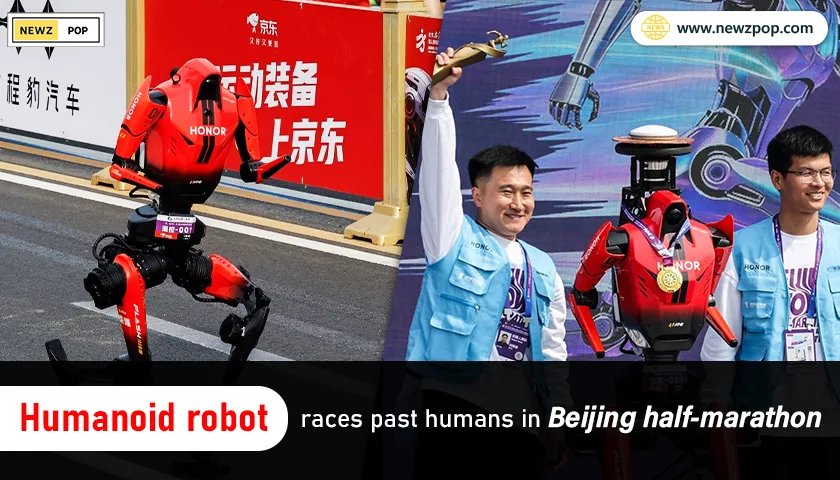
Athletics witnessed a change in Beijing when the city hosted its first annual Half Marathon on April 19, 2026. What made this half-marathon unique was the humanoid robot race. According to NewzPop, the atmosphere was full of excitement and anticipation. Everyone was wondering whether robots could truly compete against elite athletes’ stamina. When the race ended, robots stunned the sports world by finishing ahead of every human runner. They dominated the course from the very beginning to the final mile. This performance marked a significant milestone in the history of robotics and human sports. It proved that artificial motion has finally reached a level of terrifying efficiency.
The Incredible Speed of the Humanoid Robot Race
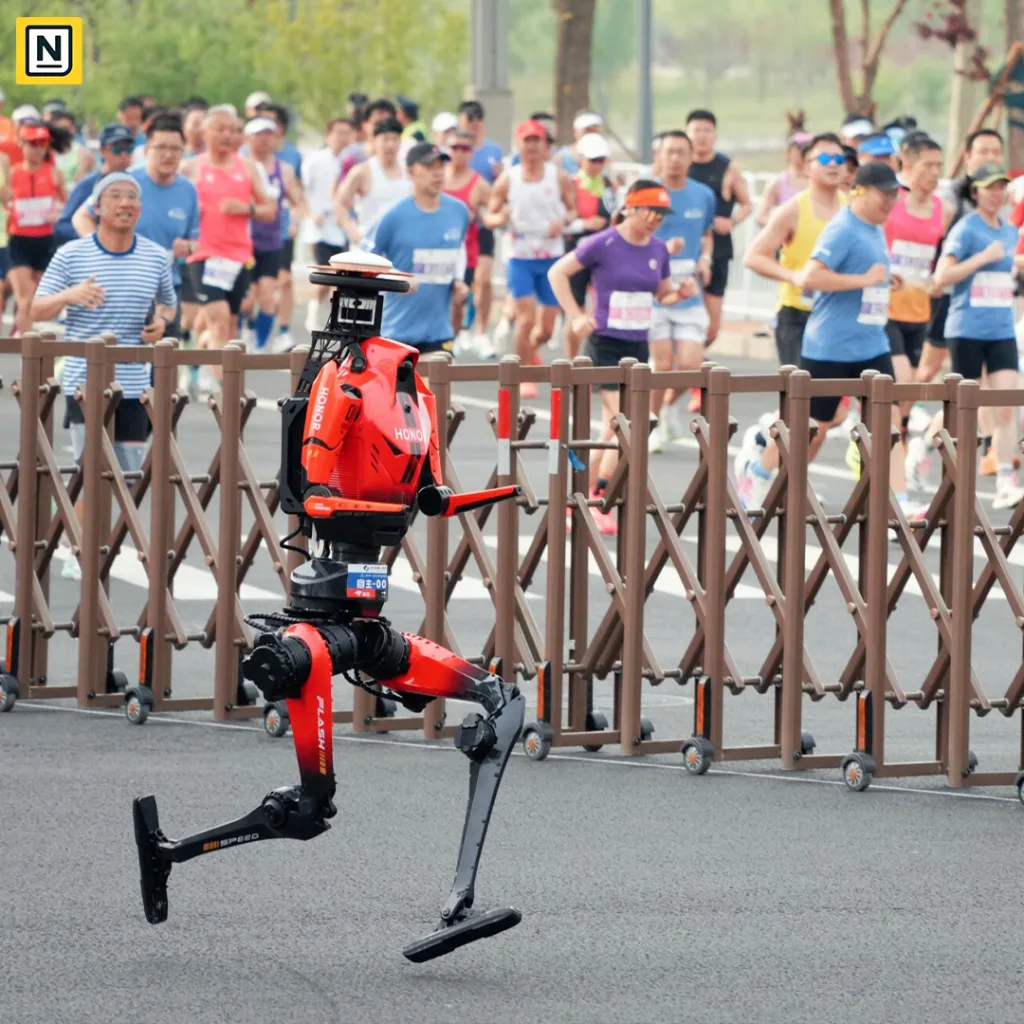
The race began near the iconic Tiananmen Square with a massive crowd cheering. Human runners took off with their usual grace and practiced breathing techniques. However, the machines nearby moved with a different kind of mechanical precision. Each step taken by the leading robot was calculated by advanced onboard computers. During this Race, the leading machine maintained a pace that seemed impossible for humans. It did not show signs of fatigue as the miles added up. With perfect balance and stability, the robot was moving through flat streets. Also, adjusting its center of gravity via its sensors. As human athletes would stop at the water stations to hydrate them, robots kept running relentlessly. At each kilometer, a greater distance separated the robots from the human athlete. Viewers of the live broadcast could hardly believe the speed of the robots displayed in real-time.
Humanoid Robot Race: A blend of tech and athleticism
The development of these machines has resulted from extensive research on how to replicate bipedal movement. Many years were spent researching the particular forms of mechanical runners used in the construction of these machines. Engineers concentrated on lightweight materials such as carbon fiber and high-strength aluminum. It helps them to run quickly with relatively little power consumption. Cooling systems were critical to the success of the robots in the Humanoid Robot Race. High-speed running generates a lot of heat in electric motors and actuators. The advanced liquid cooling allowed them to run at full speed for over thirteen miles. Human muscles eventually produce lactic acid which causes pain and slowing. Robots do not have this biological limitation as long as their batteries hold a charge. The efficiency of their gait was designed to mimic the most elite human sprinters. Every movement was optimized to waste as little energy as possible.
The Record Breaking Performance in Beijing
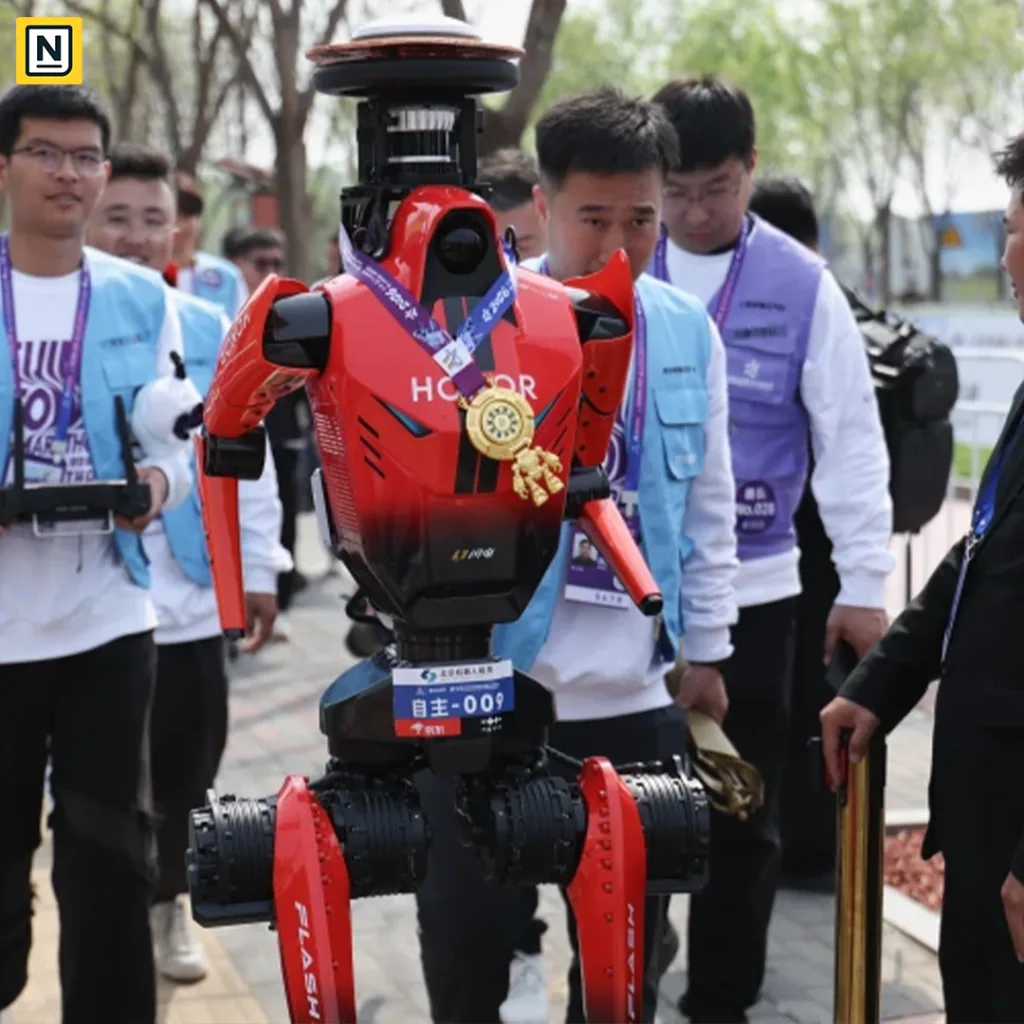
One specific robot from a Chinese tech firm stole the spotlight during the event. It managed to cross the finish line in a time that shattered existing records. This particular machine looked remarkably human in its overall shape and limb proportions. Throughout the Humanoid Robot Race, it maintained a steady rhythm that baffled the human coaches. It finished the half marathon in just under fifty-eight minutes. This time is faster than any human has ever run the distance in history. The previous world records held by legendary runners were suddenly eclipsed by a machine. This feat was accomplished without the robot ever needing a break or a drink. The precision of its timing was measured down to the millisecond by race officials. This performance proved that the era of robotic dominance in sports has arrived. It was a clear demonstration of how far technology has come in a short time. The data collected from its sensors will be used to improve future models even more.
A New Perspective on Human Training
Human athletes are now looking at these machines to learn better ways to run. Coaches are studying the data from the robot sensors to understand the perfect running form. They want to see how the machines manage their energy during the most difficult parts. Even though humans have biological limits, there is always room for small improvements in technique. The Humanoid Robot Race provided a wealth of information about efficient bipedal movement. Trainers are analyzing the strike of the robot feet on the hard pavement. They are looking at the angle of the knees and the swing of the arms. This information could lead to new training methods that reduce injuries in human runners. Technology and biology are starting to influence each other in very unexpected ways. Athletes might never beat the fastest robots again. However, they can still use this technology to reach their own maximum potential. The presence of robots on the track pushes humans to work harder than ever before.
The Future of Competitive Events
Organizers of major marathons are now facing difficult decisions about their entry rules. They must decide if they want to allow robots to compete for official titles. Some suggest that a separate league for machines is the most logical path forward. This would allow engineers to compete against each other. The Race in Beijing has set a new standard for these types of competitions. We might soon see robots competing in full marathons or even mountain trail races. The technology used in these robots will eventually find its way into medical prosthetics. This means that the research done for racing will help people walk again. The benefits of this technology extend far beyond the finish line of a race. It is a sign of a future where humans and machines coexist in every field.
Reflecting on a Historic Day in Beijing
The events of the Beijing half marathon will be remembered as a turning point in history. We have moved into a time where our creations can outrun us on our own tracks. The Humanoid Robot Race showed the world that mechanical evolution is moving at a lightning pace. While it may feel strange to lose to a machine, we should be proud. The bond between human and machine has created a history. We can say that the next race opens the door to many such possibilities.
Click here to read more tech news and updates from Newzpop’s trending archive and stay ahead of the curve.
Follow us on LinkedIn for technology updates and behind-the-scenes insights.